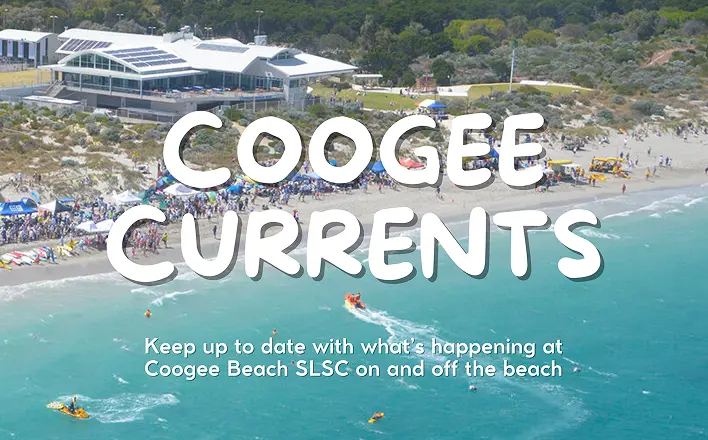
Growing stronger through surf sports
Through structured, discipline-specific training and a focus on development across all levels, the club is building a proud reputation within SLSWA competition. Many of our members begin their journey in our Nippers program, which introduces children from age five to the beach, surf safety, rescue skills and the excitement of surf sports. As their confidence and ability grow, Nippers are supported to take part in carnivals and continue progressing through the club’s competitive and development pathways.
Surf sports disciplines
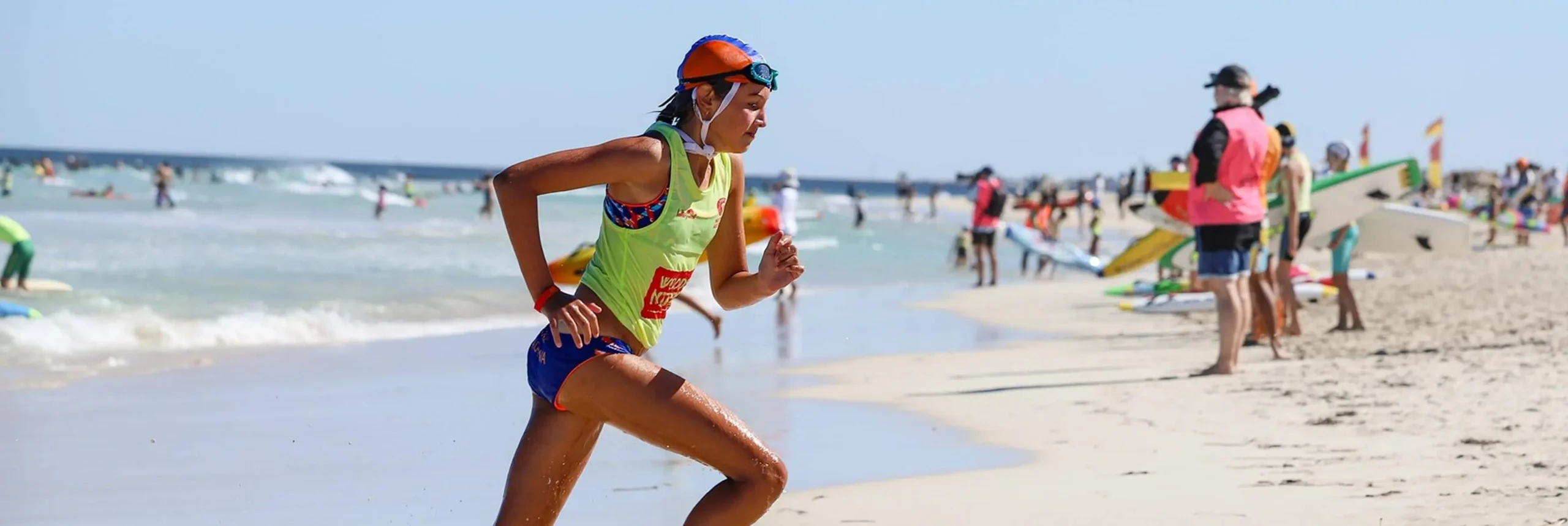
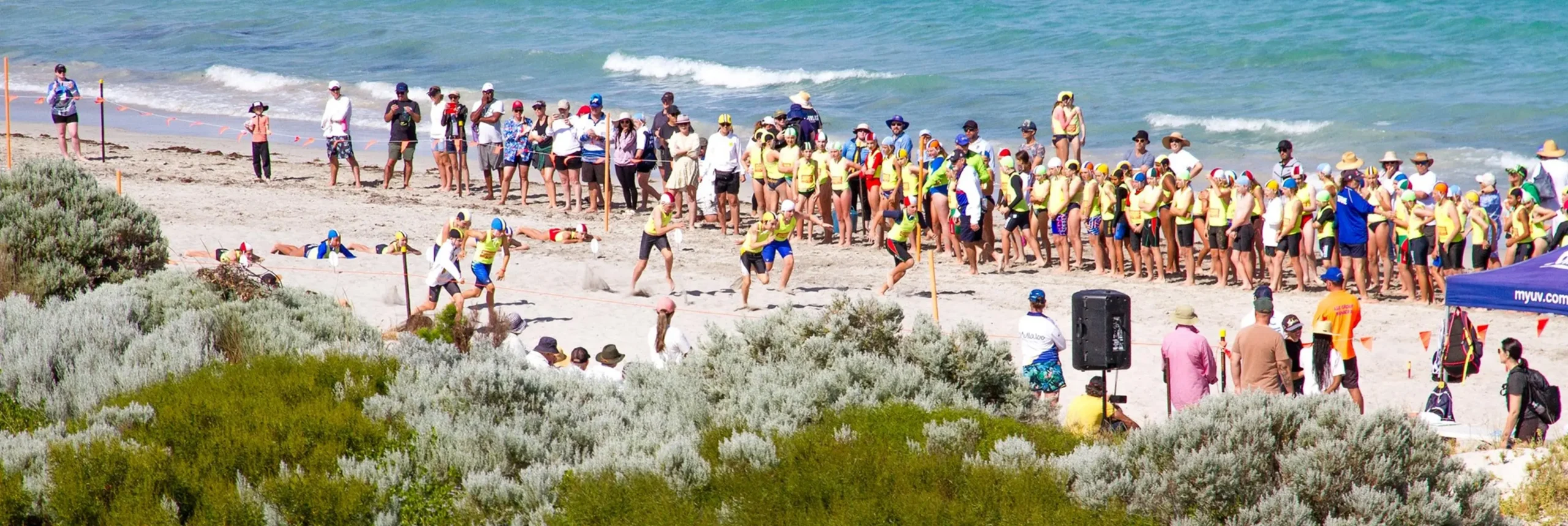
Surf Sports showcase the skills and physical abilities required to save a life. Disciplines vary from the famous Iron Man events to theory based First Aid events, and welcome male and female competitors in categories from Under 9 to 75+. Coogee Beach and SLSWA have the ability to compete in the following disciplines:

Board Race & Board Relay
From the beach (standing start) each competitor enters the water with their racing board, paddles around all buoys and returns to the beach. The winner is judged by the first competitor to cross the finish line on their feet and in contact with their board. The relay event is the same format, contested in teams of 3.
Ski Race, Double Ski Race & Ski Relay
From a floating start, competitors paddle their surf ski around three buoys and return to the finish line. The finish is judged when any part of the surf ski crosses the finish line with the competitor and their paddle all in contact. Ski events can be single or double (two people in the same ski). The relay event is the same format, contested in teams of 3.
Board Rescue
This two-person event comprises of a swimmer and a racing board paddler. The race commences with the swimmer swimming to their allocated buoy and then signalling back to the beach for their board paddler to come out and collect them. Once the paddler reaches the swimmer, the two paddle the board back to beach and cross the finish line.
Surf Race & Surf Teams
From a standing start on the beach, competitors run, wade and swim 400 meters to sea to round as set of buoys and then return to the beach. The event concludes with a run to the finishing line. In a Surf Teams event, clubs enter multiple competitors in the one race, and the final winning team is determined by the cumulative points of team members’ final placings.
Wade & Wade Relay (Juniors)
Competitors run out to an allocated turning mark at knee depth water and then the competitors may either wade, duck dive or swim along the beach to another marker before returning to the beach to run to the finish line. The relay event is in the same format, with teams of 4.
Sprint
Competitors race on a straight sand course of 90 metres (70m for juniors) to the finishing line.
Relay
Teams of 4 competitors race on a straight sand course of 90 metres (70m for juniors) with a baton, running one lap each. The final runner of a team over the finish line wins.
Beach Run
Competitors race on a sand course for 1km or 2km races.
Beach Flags
Competitors start lying on their stomach facing away from a baton/s buried in the sand 15 – 20 metres away. There are always fewer batons than competitors. On the starting gun, competitors rise, turn and race to secure a baton. The competitor(s) who fail to obtain a baton are eliminated. The process repeats until there is a single winner.
Iron Man & Iron Woman
These events are conducted over a course consisting of three legs – a swim, surf ski and surf board – and concluding with a beach sprint to the finish line. The order of the legs may vary and is decided by draw prior to the event.
Taplin Relay
Teams of swimmers, board paddlers and ski paddlers, compete together as a team relay over an Ironman course. The order of the legs may vary and is decided by draw prior to the event. The Taplin Relay event may be conducted in three person (one swimmer, one surf board and one surf ski paddler), six person (two competitors for each water leg), or four person (one competitor per water leg plus a beach sprinter to complete the race) variations.
Cameron Relay
(Taplin relay for juniors) Teams of four competitors comprising of a surf board paddler, surf swimmer and two runners compete in this relay. The event order is water/run/water/run, and the order of water legs is drawn by ballot.
Lifesaver Relay
Conducted over a course consisting of a surf boat, a surf ski, a surf board, a swim and a beach sprint, with nine team members. The surf boat leg is always first, and the sprint leg always concludes the race. The order of the other legs is drawn by ballot. Each leg shall follow a course from the beach out to sea, rounding buoys and returning to tag the next leg competitors.
Obstacle Swim
Competitors swim freestyle a total of 200 metres, passing under eight immersed obstacles. 100m metres, passing under four immersed obstacles for U11-U13 & 60+.
Obstacle Relay
Four team members swim freestyle 50 metres, passing under two immersed obstacles.
Line Throw
A timed event where the competitor throws an unweighted line to a team member in the pool and then pulls him/her 12.5 metres back to the poolside. 10 metres for U11-U13.
Freestyle with Fins
With a dive entry, competitors swim 50 metres freestyle with fins.
Patient Tow (Juniors)
With a dive entry, the rescuer swims 50 metres freestyle with fins and rescue tube, where their patient is waiting. The rescuer secures the rescue tube around the patient and both return to the start.
Manikin Tow (Seniors)
A competitor swims 50 metres freestyle with fins towing a rescue tube. At the tuning edge of the pool the rescue tube is placed around a floating manikin and is towed back 50 metres to the finish line.
Rescue Medley (Seniors)
This event involves swimming 50 metres in freestyle, turning and swimming underwater 17.5m metres to a submerged manikin. After recovering the manikin it is carried to the finish edge of the pool.
Manikin Carry (Seniors)
A competitor swims freestyle for 25 metres then dives to recover a submerged manikin and then carries it to the finish edge of the pool. U14s Swim 35 metres before covering the submerged manikin.
Manikin Carry with Fins (Seniors)
A competitor swims freestyle for 50 metres then dives to recover a submerged manikin and then carries 50 metres to the finish edge of the pool.
Brick Carry (Juniors)
With a dive start, competitors swim 25 metres freestyle and then dives to recover a submerged rubber brick to the surface within 5 metres of the pick-up line. The competitor then carries the rubber brick to touch the finish edge of the pool. U11s can use flippers.
Brick Carry Relay (Juniors)
A relay of four competitors each swimming 25 metres while carrying a rubber brick.
Manikin Relay (Seniors)
A relay of four competitors each swimming 25 metres while carrying a manikin.
Medley Relay
A team event involving four legs: 50 metre freestyle without fins, 50 metre freestyle with fins, 50 metre freestyle towing a rescue tube without fins, 50 metre freestyle with fins towing a team member to the finish edge of the pool.
Super Lifesaver (Seniors)
Competitors swim 75 metres freestyle to recover a submerged manikin, and continue carrying the manikin 25 metres to the turning edge. The manikin is released, fins are put on and the competitor tows a rescue tube 50 metres. At the pool turning edge, the rescue tube is placed around a floating manikin which is towed to the finish end of the pool.
Lifesaver Relay (Seniors)
A team event involving four legs (Must have 2 Male & 2 Female): 50 metre freestyle without fins, 50 metre freestyle with fins and picks up submerged manikin at the end, 50 metre carrying the manikin without fins, 50m metre carrying the manikin with fins to the finish edge of the pool.
IRB (Inflatable Rescue Boat) competition aims to improve the skills and technique of IRB drivers and crew as well as allow crews to demonstrate their techniques and abilities to perform rescues.
There are five events in IRB competition.
IRB Rescue
Teams are comprised of one patient, one driver, and one crew member. The patient is in the water at a designated buoy, the driver and crew member are at the starting line at the on the beach. On the starter’s signal, competitors launch the IRB, proceed through the surf to pick up the patient, round the buoy, and return to shore.
IRB Team Rescue
Teams are comprised of one patient and two crews (one driver and one crew member per crew). On the starter’s signal, the first crew launches the IRB and proceeds through the surf to the patient. As the IRB rounds the buoy, the first crew member jumps overboard. The driver completes the buoy turn and returns to shore alone. The second crew member moves into the water, and takes control of the IRB. The first driver runs up the beach and tags the second driver. The second crew re-launches the IRB, proceeds through the surf to pick up the patient and the first crew member, rounds their buoy, and returns to shore to finish the event.
Mass Rescue
Teams are comprised of one driver, one crew member and two patients. Both patients start the event in the water. The crew proceed through the surf, pick up their first patient and return to shore. The driver and the patient must exit the IRB where the patient retires to the beach. The driver proceeds to the start/finish line, rounds a marker and returns to the IRB. The IRB is re-launched and the crew rescues the second patient, returns to the beach and across the finish line.
IRB Rescue – Tube Rescue
Teams are comprised of one patient, one driver, and one crew member. On the starter’s signal, competitors launch the IRB, proceed through the surf and turn around their respective turning buoy. The crew member then enters the water and swims past the turning buoy to their patients. The crew member secures the rescue tube around the arms of the patient and tows the patient back to the IRB. Once the crew member and patient are safely aboard, the driver navigates the IRB around the team’s turning buoy and returns to shore to finish.
IRB Relay
This event is a continuous relay involving the four events in the following order: Rescue Tube, Mass Rescue, Teams Rescue and Rescue. Each leg is per the description above except for changeovers between legs.
Rescue Tube Race
The rescue tube race is contested on the same course as the belt race. Competitors run up the beach to collect their rescue tube, turn and race to the water and swim to their allocated buoy to signal their finish of the race.
Rescue Tube Rescue
This event features four team members: a patient, a rescue tube swimmer and two assisters. The patient swims to their allocated buoy and signals back to the beach. The rescue tube swimmer then swims to rescue the patient with the assistance of swimming fins and a rescue tube. Upon arrival at the buoy the rescue tube swimmer harnesses the patient into the tube and swims back to the beach. As the rescue tube swimmer and patient approach the shore the two rescuers enter the water to assist in getting the patient across the finish line. The event can be also contested as a two-person event, without the assisters.
First Aid
This competition involves two team members having to respond to a simulated accident scenario within a set period of time which varies depending on the age group. The scenarios incorporate props and volunteers who play the part of accident victims. Teams are required to examine the victims, provide a diagnosis and then provide treatment using materials from their first aid kits. Teams are assessed against a set criteria and awarded points depending on how they perform against the criteria.
Champion Lifesaver
This event provides an individual the competitive opportunity to demonstrate the physical and mental skills required to be a surf lifesaver, including a surf lifesaving question paper, resuscitation, surf race, surf board race, beach sprint and a rescue tube race.
Champion Patrol
This event includes a surf teams race, a board/tube rescue relay race, a 20 question theory paper, and simulated first aid and CPR scenarios. Champion Patrol aims to demonstrate how surf lifesavers work as a team in performing some or all skills associated with surf rescue patrol work.
Rescue and Resuscitation (R&R)
A competition based on the simulated rescue and resuscitation of a patient from the surf using traditional techniques: belt and reel. It combines swimming, resuscitation skills, marching and drill with teams judged against set criteria. Competitors are assessed and marked on their performance through the whole competition.
A surf boat is an oared craft used by a crew consisting of five competitors, four of whom shall be rowers and the fifth who shall control the boat by a sweep oar. Popular in Australia, crews are trained in boat handling technique in various beach conditions.
A boat crew consists of five competitors, four rowers and a sweep who controls the boat by use of a sweep oar and commands to the rowers.
Boat crews start at the water’s edge holding their boats ready. On the starting signal, crews row to their assigned turning buoy approximately 400 metres off shore and return to the beach. The winner is the first crew to pass their boat between the finish flags on the beach.
Some events are conducted as short course which is approximately 250m off shore.

Surf sports FAQs
You can join the Club online by following the steps on the How to Join/Renew page and follow the prompts to complete the membership application forms and make a secure payment, or contact our Administration office during opening hours.
- Water Events
- Beach Events
- Multi-discipline Events
- Pool Rescue
- IRB Racing
- Surf Rescue
- Surf Boats
For more information click here
The Club offers free member training for Nippers and Masters in Boards and Sprints. Training is also available in other Surf Sports areas such as IRB Racing and Surf Boats. Join our Coogee Beach WA SLSC: Surf Sports Facebook group to stay up to date.
Additional costs may include:
- Bronze Medallion course (if you haven’t completed it and it’s required as a prerequisite to compete)
- Club Competition Cap and Competition Vest (if you don’t already have them)
- Registration fees for some competition events (payable upon registration)
You can join the Club online by following the steps on the How to Join/Renew page and follow the prompts to complete the membership application forms and make a secure payment, or contact our Administration office during opening hours.
- Water Events
- Beach Events
- Multi-discipline Events
- Pool Rescue
- IRB Racing
- Surf Rescue
- Surf Boats
For more information click here
The Club offers free member training for Nippers and Masters in Boards and Sprints. Training is also available in other Surf Sports areas such as IRB Racing and Surf Boats. Join our Coogee Beach WA SLSC: Surf Sports Facebook group to stay up to date.
Additional costs may include:
- Bronze Medallion course (if you haven’t completed it and it’s required as a prerequisite to compete)
- Club Competition Cap and Competition Vest (if you don’t already have them)
- Registration fees for some competition events (payable upon registration)